Comprehensive and collision car insurance: what’s the difference and which do you need?
The difference between comprehensive and collision coverage is simple once you know what each pays for and when it applies. They cover different risks and usually have separate deductibles. Since car insurance is not one-size-fits-all, this guide from a trusted Canadian insurer, belairdirect, explains how to choose the right mix for your budget, vehicle, and Ontario driving conditions so you can make informed decisions, avoid unexpected costs, and maintain peace of mind in your day-to-day travel routines.
Key insights:
Key insights:
- Comprehensive: non-collision damage (for example; theft, weather, glass)
- Collision: crash or rollover damage, even if you’re at fault
- Separate deductibles; higher deductibles usually lower premiums
- Financed or leased vehicles typically require both
Comprehensive and collision insurance at a glance
- Comprehensive insurance: Protects your vehicle from non-collision events—think theft, vandalism, fire, hail, falling objects, flood, and accidents involving an animal. It’s about the unexpected that doesn’t involve hitting another vehicle or object.
- Collision insurance: Covers damage to your vehicle from a collision—whether you hit another vehicle or object (guardrail, pole), or your vehicle rolls over. It can apply even if you’re at fault.
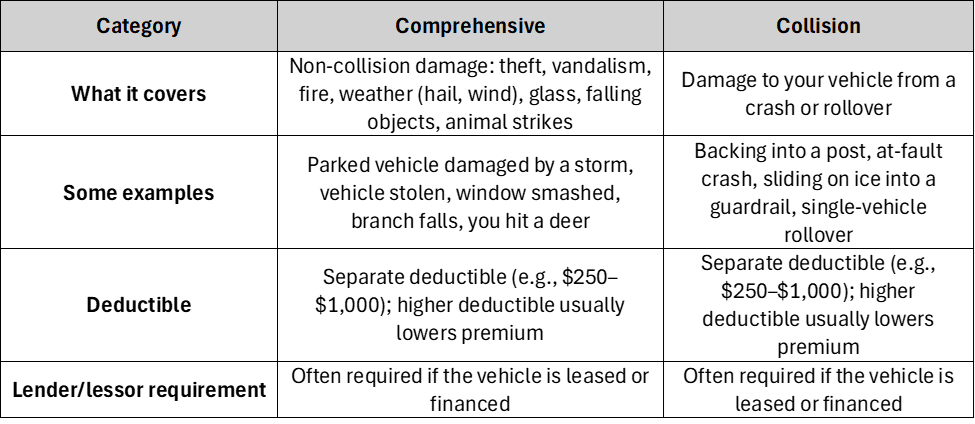
Quick comparison between comprehensive and collision
At a glance: see what each coverage pays for, when it applies, how deductibles work, and lender requirements.
What is comprehensive car insurance coverage?
Comprehensive insurance is a type of optional coverage that helps pay to repair or replace your vehicle when it’s damaged by events other than a collision with another vehicle or object. It’s designed for unpredictable risks that can happen at home, at work, or on the road—even when you’re not driving. For many Ontario drivers balancing work schedules, commuting responsibilities, and family commitments, comprehensive coverage is often considered a practical layer of protection. A number of Canadian insurers, including belairdirect, offer flexible auto insurance options that allow drivers to tailor comprehensive coverage based on their lifestyle and vehicle needs.
What comprehensive typically covers
These are the most common non-collision risks that comprehensive can cover:
- Theft or attempted theft
- Vandalism and malicious damage
- Fire and explosion
- Weather: e.g., hail, windstorm, lightning, and other perils
- Falling or flying objects
- Glass damage (e.g., chipped or cracked windshield)
- Animal collisions (e.g., hitting a deer or moose)
What comprehensive typically does not cover
Comprehensive won’t pay for the items below; other coverage may apply:
- Damage from a collision with another vehicle or object (that’s collision coverage)
- Mechanical breakdown or wear and tear
- Personal items stolen from your vehicle (often covered under home or tenant insurance)
- Commercial use beyond your policy allowance (check your policy wording)
Some real-life scenarios for comprehensive
See the following practical examples of when comprehensive could help:
- A hailstorm dents your hood and roof
- You wake up to a smashed window and missing stereo
- A tree limb falls during a windstorm and crushes your fender
- You hit a deer at dusk on a rural highway
What is collision car insurance coverage?
Collision insurance is an optional car coverage that pays to repair or replace your vehicle after an impact with another vehicle or object, regardless of fault, up to your policy limits and minus your deductible. For drivers navigating busy highways, winter conditions, or traffic and congestion in Ontario, collision coverage is often an important consideration.
What collision typically covers
Collision applies when impact or rollover damages your vehicle, such as:
- At-fault accidents with another vehicle
- Single-car accidents
- Hit-and-run damage to your vehicle
- Rollovers (when your vehicle tips onto its side or roof, with or without another impact)
What collision typically does not cover
These situations are outside collision coverage and may fall under other parts of your policy:
- Theft, vandalism, weather damage, or falling objects (those are comprehensive)
- Injuries to you or others (addressed by other coverages like accident benefits or liability)
- Damage to someone else’s vehicle or property when you’re at fault (covered by liability)
Some real-life scenarios for collision
Here are some everyday situations where collision could pay for repairs:
- You back into a concrete pillar in a parking garage
- You slide on black ice and hit a guardrail
- You’re at fault in a fender-bender
- You run over an object on the road, damaging the underside of your vehicle
How deductibles and limits work
Both comprehensive and collision come with separate deductibles—what you pay out of pocket before your insurer covers the rest.
Choosing a deductible
Pick a deductible that balances your monthly premium with what you can afford per claim.
Lower deductible (e.g., $250–$500):
Higher deductible (e.g., $750–$1,000+):
Note: In the event of a total loss, your settlement is usually limited to the actual cash value (ACV) of your vehicle at the time of loss, minus your deductible.
Lower deductible (e.g., $250–$500):
- Higher premium
- Less out-of-pocket cost when a claim occurs
- Good for newer vehicles or high-risk areas (hail, theft, wildlife)
Higher deductible (e.g., $750–$1,000+):
- Lower premium
- Higher out-of-pocket per claim
- Good if you rarely drive, have a robust emergency fund, or your vehicle value is lower
Note: In the event of a total loss, your settlement is usually limited to the actual cash value (ACV) of your vehicle at the time of loss, minus your deductible.
Cost factors for comprehensive and collision
Premiums may vary by driver, vehicle, and province.
Key factors include:
Key factors include:
- Vehicle make, model, and year
- Repair and parts costs
- Your driving record and claims history
- Where you live and park (urban vs. rural, street vs. garage)
- Weather risks (hail-prone, flood-prone, wildfire zones)
- Wildlife collision frequency in your region
- Chosen deductibles and coverage options
- Use of vehicle (commute, pleasure, business)
Do you need comprehensive, collision, or both?
The right mix depends on your vehicle’s value, your loan/lease situation, your risk tolerance, and your local environment. Before you make changes, review your options with a licensed insurance professional to ensure you’re choosing the right coverage for your vehicle and budget.
Consider comprehensive if:
- You live in an area with high theft or vandalism rates
- You frequently park outside or on the street
- Your region sees severe weather (hail, windstorms, wildfires)
- You drive in rural or forested areas with higher animal strike risk
- Your vehicle is newer or higher value
Consider collision if:
- You want protection for at-fault accidents or single-vehicle incidents
- You commute in heavy traffic or drive year-round in winter conditions
- Your vehicle is newer, financed, or leased
When both make sense
In these cases, carrying both often provides the best protection:
- Financed or leased vehicles (often required)
- Newer models where repair costs are high
- Regions with both collision and non-collision risks (urban crime plus winter driving)
When you might reduce or remove coverage
If these conditions fit, you might scale back—but review with a licensed professional first:
- Older vehicles with low market value where premiums approach the vehicle’s ACV
- If you can comfortably cover minor repair costs out of pocket
Tailoring your coverage to where you live
Because risks vary across Ontario and surrounding regions, aligning coverage with local driving conditions is important.
Drivers in Ontario often experience a mix of traffic, harsh winter driving conditions, and weather variability, which makes both coverage types relevant depending on individual circumstances.
Here are some examples:
Drivers in Ontario often experience a mix of traffic, harsh winter driving conditions, and weather variability, which makes both coverage types relevant depending on individual circumstances.
Here are some examples:
- Urban centers: Consider comprehensive for theft and vandalism, and collision for traffic density.
- Prairie provinces: Consider comprehensive for storm damage.
- Rural and northern regions: Comprehensive for wildlife collisions and remote parking; collision for gravel and secondary roads.
- Coastal areas: Storm surge and wind risk make comprehensive valuable.
- Snowbelt and mountain regions: Collision for winter driving conditions; consider lower deductibles during peak season.
Add-ons and bundles to consider
Add-ons and bundling home and auto insurance are common options among Canadian drivers looking for convenience and potential savings. Many insurers, including Belairdirect, offer add-ons, and bundling options that combine policies under one account.
______________
Did you know?
According to a May 2025 study by Léger Marketing, 44% of Canadians looking to save on insurance seek insurers that offer bundled home and auto discounts.
Source: 2025 survey of 3,204 Canadians aged 18+ conducted using Leger's LEO Panel.
______________
- Specified perils or all perils options: In some provinces, you can choose specified perils or an all-perils package that combines comprehensive and collision with additional protections.
- Loss of use and rental vehicle coverage: Helps with transportation while your vehicle is being repaired after a covered claim.
- Accident forgiveness: Protects your driving record from your first at-fault collision claim, where available.
- Roadside assistance: Helpful for breakdowns and towing, separate from collision/comprehensive.
- Home and auto bundle: Bundling your home and auto insurance can help you save with multi-policy discounts and manage your coverage in one place.
______________
Did you know?
According to a May 2025 study by Léger Marketing, 44% of Canadians looking to save on insurance seek insurers that offer bundled home and auto discounts.
Source: 2025 survey of 3,204 Canadians aged 18+ conducted using Leger's LEO Panel.
______________
Claims 101: What to do after a loss
Follow these steps before making a claim with your insurer. Steps may vary by province and policy.
- Safety first: Ensure no one is injured and move to a safe location.
- Document the damage: photos, time, location, weather, and any involved parties.
- Report promptly: Contact your insurer or broker as soon as possible.
- Secure your vehicle: Prevent further damage (e.g., cover a broken window).
- Keep receipts: Temporary fixes may be reimbursable under your policy terms.
How to choose the right coverage
- Start with your vehicle’s value and financing status.
- Assess local risks (theft, weather, wildlife, traffic).
- Pick deductibles that match your budget.
- Consider your driving patterns and seasonal changes.
- Ask about discounts for bundling home and auto, anti-theft devices, safe driving programs, and winter tires (where applicable).
The bottom line
Comprehensive coverage protects against the unexpected that isn’t a crash—theft, storms, and animal strikes. Collision, on the other hand, protects your vehicle when there’s an impact. Together, they can help Ontario drivers avoid costly repair bills and maintain peace of mind on the road. Trusted Canadian insurers such as belairdirect offer flexible coverage options that can be tailored to different vehicles, driving needs, and budgets.
Frequently asked questions about collision and comprehensive
Find quick answers to common questions about comprehensive and collision in Canada.
Is comprehensive or collision required by law?
Neither is legally required in most regions, but lenders often require both for leased or financed vehicles.
If I hit an animal, is it comprehensive or collision?
If you hit a live animal (like a deer), it’s usually treated as a comprehensive claim—even though it’s a “collision.” If you swerve to avoid an animal and hit something else, that damage is usually covered under collision.
Will my premiums go up if I make a claim?
It depends on the claim type, your history, your province, and your policy features (e.g., accident forgiveness). Speak with your insurer for more details.
Do I need both on an older car?
Maybe not. Compare your annual premiums and deductibles to your vehicle’s actual cash value to decide if the coverage still makes financial sense.